|
What you do with the recorders already on site
|
They come out of the path. Camcloud's own NVR/DVR support article says the platform does not connect to a local DVR or NVR. Each camera has to reach AWS independently, so a retrofit behind an existing recorder needs rewiring. |
They stay. The TetherBox sits alongside the existing NVRs, DVRs and panels and pulls from them. It runs as software on a server the site already owns, so nobody rips out working kit to start. |
|
Which devices you can connect
|
Any ONVIF or RTSP IP camera the installer can point at the cloud. Camera-agnostic, but camera-only. |
1,000+ integrations across 17,000+ device models, plus any ONVIF camera with full features - not a bridged, feature-reduced tier. |
|
What your operators see on one timeline
|
Cameras only. Alarm panels and access control are not in the same dashboard. |
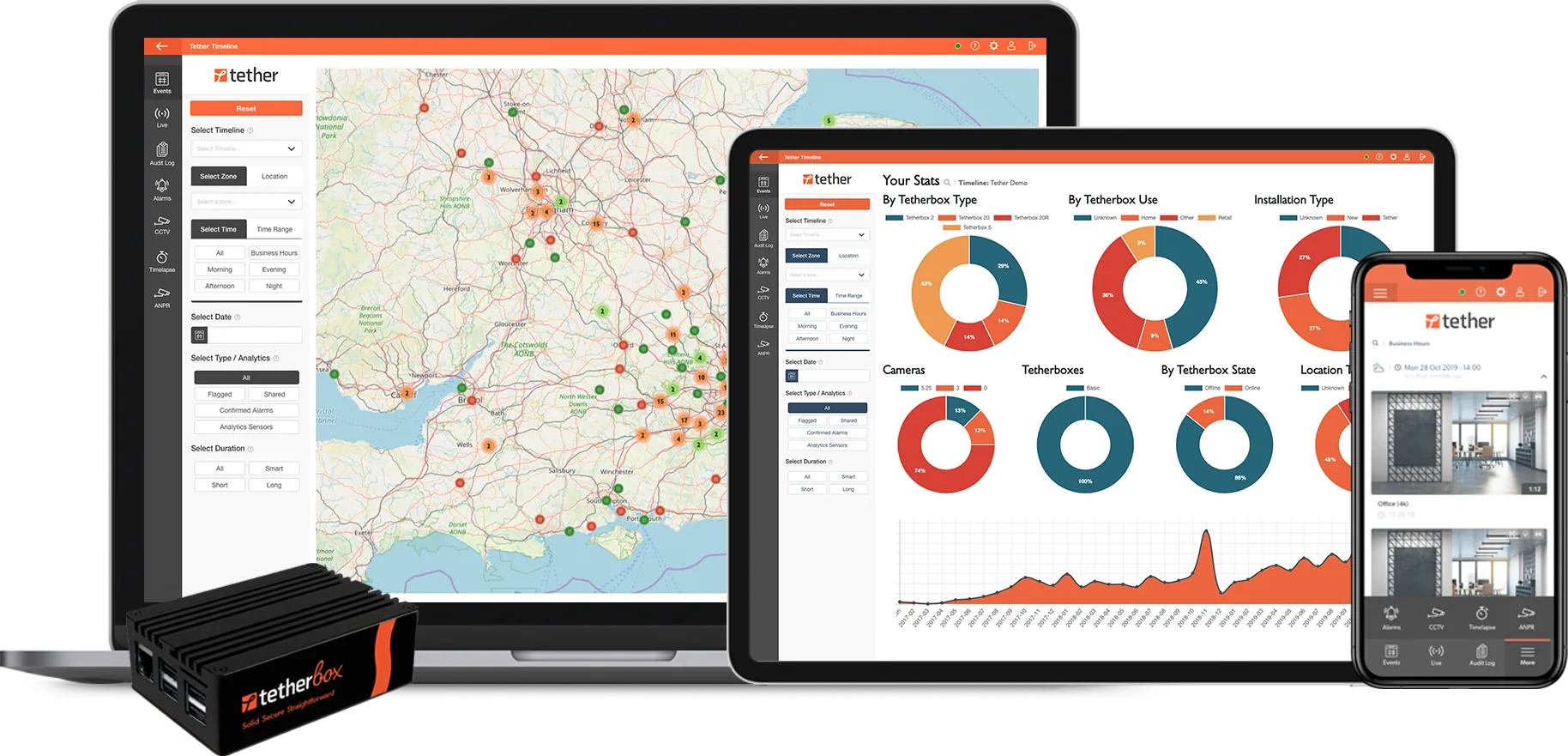
Video, access control, intruder and automation. One operator, one timeline, one dashboard across all four. |
|
Who monitors your alarms
|
Not an ARC platform. Monitoring-station signalling and alarm-panel integration are absent, so a monitored site keeps a separate path. |
It stays. TetherX signals Immix, Sentinel, CONXTD, MASterMind, Bold Patriot Manitou, Stages, CHeKT and others directly, so the existing ARC, SOC contacts and alarm SLAs carry on. |
|
What you can still do when the Internet drops
|
Depends on the camera. A local cache on the camera SD card or an optional NAS keeps events through an outage. SD retention runs 24-48 hours at a usable bitrate, the NAS is an extra box to source, and neither is the default. |
Keeps recording and keeps working. Recording, doors and alarms run on the TetherBox on the local network, and the console picks up where it left off when the link returns. |
|
What your uplink has to carry
|
The camera streams to AWS continuously, so the uplink carries the recording itself. A thin line caps how many cameras a site can run. |
Thumbnails, metadata, and the clips an operator opens or chooses to sync. A thin rural line still records every camera, because recording never leaves the local network. |
|
Who you buy it from
|
Both. A mature reseller and white-label programme since 2013, alongside self-serve sign-up on camcloud.com. The installer can meet the platform's own funnel on the same job. |
Your installer, always. TetherX sells through the channel only and does not quote end customers direct, so the integrator keeps the account. |
|
What you actually pay for
|
Per camera per month, from a free home tier through roughly $6-10 for motion recording to around $15 for 30-day continuous 2MP. |
An annual subscription by channel count, from £100/site/year. Not per operator seat, not per analytic, and no concurrent-user cap. |
|
Where your recordings are stored
|
In AWS. Cloud is where recordings live rather than a copy of them, because there is no on-site recorder in the design. |
On the TetherBox at site by default. Cloud recording is optional per camera, into a UK, EU, US, Canadian, Indian or Australian region the customer picks. |