
A door on a distribution site opens at 02:14. The access system logs a credential. The cameras hold the footage. The alarm panel holds the zone that was armed at the time.
Three vendors, three apps, three clocks, and an operator matching timestamps by hand in the middle of the night.
The cost of that is not in the hardware. Nobody is complaining about the readers or the credentials. The cost is the ten minutes somebody spends proving what one door event already recorded, multiplied by every event anybody ever has to look into.
A credential is not a person
An access log answers a narrower question than most people assume. It says a card was presented and a door released. It does not say who was holding the card, whether anyone followed them through, or whether the door stayed open behind them.
That distinction matters exactly when it is expensive: a theft, a dispute over hours, an insurance claim, a police request. An operator who has to reconstruct it from three systems is working from three partial answers and their own arithmetic.
One timeline, three sources
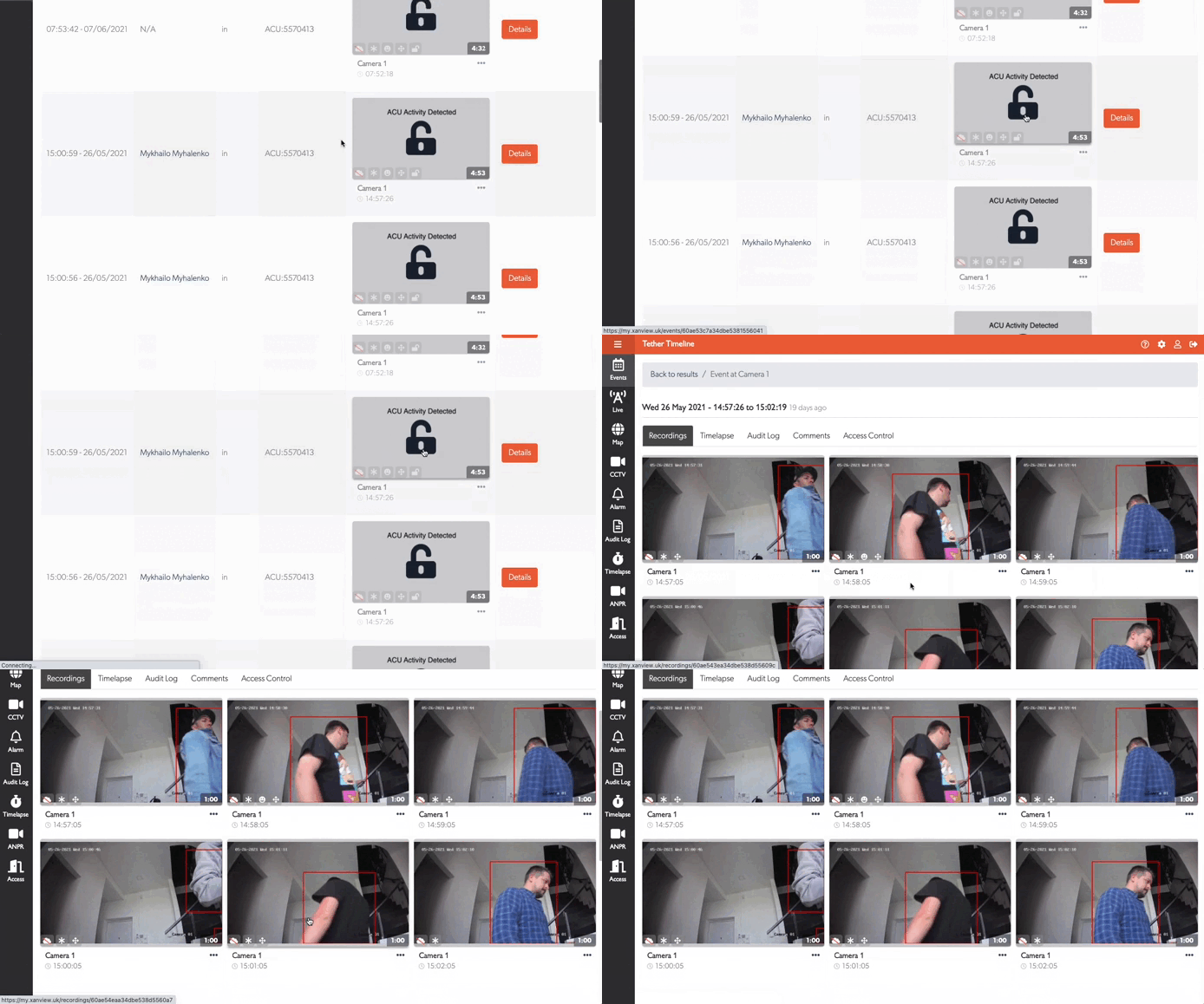
TetherX puts door events, video and alarms on the same timeline.
- Door events arrive with the video. A badge, a rejected credential, a forced door or a door held open is recorded next to the footage of it, so the question an operator answers is who walked through.
- Access, video and alarms in one console. The intruder panel that armed the zone and the door that opened in it sit on the same event. Nobody switches applications to work out what happened.
- Permissions that follow your organisation. A site manager sees their doors, a regional team sees their region, per role, across dozens of sites. See the org chart approach for how that maps.
- The readers stay on the wall. Paxton Net2 feeds TetherX over the controllers already in the building: users, doors, levels and events. You add a layer above the access system rather than re-cabling for it.
The same event at two in the morning
The operator opens one event. The credential, the clip and the zone state are already lined up. Somebody following a badge-holder through is visible on the clip. A door held open for four minutes is its own event, sitting on the timeline where it happened.
By the time a report is needed, the work of assembling it has already happened.
For integrators
Unifying access and video is usually sold as a convenience. It is more useful than that: it is the difference between a log that records what a card did and a record of what a person did, which is what an investigation actually needs.
It is also a layer that goes onto an estate with access control already installed, over the controllers already on the wall. That makes it a service to sell rather than a rip-out to justify.
See doors, cameras and alarms on one timeline, or read why integrators choose TetherX.

Leave a Comment